Weight Loss Habits Secretly Destroying Your Progress
Have you ever felt like you are doing everything right?
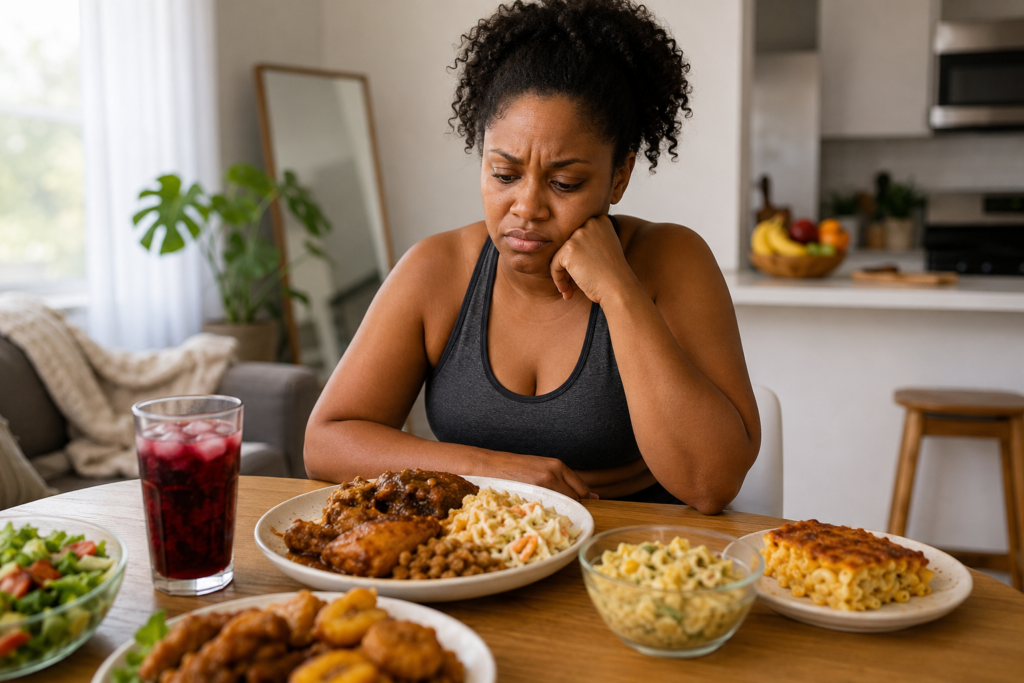
Still, your body refuses to cooperate with your efforts, despite common Caribbean weight loss habits.
Somehow, the scale still does not move the way it should.
Deep down inside, it starts to mess with your mindset. That quiet frustration creeps into your daily thoughts.
You experience intense guilt after eating a good meal. You feel deep disappointment when your clothes fit the same way.
The dark thought arrives that you have failed once again.
Here is the uncomfortable truth most people do not say out loud. It is not always a matter of willpower or you’re lazy or undisciplined.
It’s that some of the habits you grew up with are secretly working against you. Think about the big plates of food that look like genuine love.
Consider the sweet drinks that feel harmless in the moment.
Remember the culture of one more slice or scoop. It does not feel like a problem at first, until it becomes a massive burden. You get completely stuck in this vicious cycle.
You eat, you regret, you restart, and then you repeat the pattern. You end up feeling guilty like you are failing at something everyone else seems to have figure out.
What if the actual problem is not you? What if the issue involves things you were never taught to notice?
Let us break it down today, so you can finally see what has been holding you back from your goals.
Awareness of Portion Reality
Before anything changes in your life, you must realize one thing.
This is not about building more discipline or starting a completely new meal plan either. Clearly, it requires a deeper level of personal awareness. Most people don’t eat food all day long. They are eating far more than they think.
That is exactly where the trap hides from your view.
A simple plate of rice does not look dangerous. A second helping of stew chicken does not feel extreme. Likewise, a piece of creamy macaroni pie at a family gathering does not feel like overdoing things.
It feels completely normal.
Your eyes and your daily habits are guilty of deceiving you. What feels like a regular plate can actually be two or even three servings in disguise.
This is especially true in Caribbean culture. This is because big portions represent the standard, not the exception.
When someone says they are eating clean but still not losing weight, this is often the missing piece. The problem is not the food itself.
The problem is the actual amount.
This is exactly where frustration starts to build. You are thinking about how you can be doing this much right and still getting nowhere.
That confusion is very real and drains your spirit. It makes people question their own worth. It makes them shrink their daily effort. Sometimes it even makes them quit their journey altogether.
Imagine pouring fresh water into a cup that already has a small hole at the bottom.
You keep filling it up, but it never looks full. That is what unnoticed portions do to your progress. They cancel out your hard work without making it obvious to you.
This is not about extreme restriction. This is not about cutting everything out of your life but developing awareness.
Start with these steps:
- Notice your total plate size without judging it.
- Ask yourself if seconds come from hunger or habit.
- Pay close attention to how often extra food becomes normal.
It sounds too simple to work. This is exactly where change begins.
Once you see it, you cannot unsee it anymore. That changes everything that comes next.
“Natural Food = Unlimited Food” Thinking
There is a powerful belief that sits in many kitchens. People assume that if food is natural, it must be safe.
They believe that if it is homemade, it cannot be the problem.
The common logic goes like this. Rice is fine, provisions are fine and dhal is fine.
Thus, why would there be a weight issue at all? It feels very solid as an argument. It feels almost comforting to believe.
This logic misses something important. Food does not stop being energy because it is traditional. It adds up, even when the food is familiar to you. A plate of pelau can be wholesome.
However, two full plates of pelau with stew chicken and a glass of juice is a different story. This happens not because the food is bad. It happens because the portion sizes do not work in your favour.
People often trust natural food far more than processed food. They do not question it. They do not
measure it. They do not slow down when eating it. That is exactly where the overshooting happens. It does not feel like overeating to your brain. It feels like normal eating.
Think about a traditional Sunday lunch table. The meal includes rice, stew chicken, macaroni pie, potato salad, and fresh salad on the side. One plate becomes two.
Sometimes it even becomes three plates. Nobody thinks anything is wrong because everyone around them is doing the same thing.
The cultural environment normalizes excess.
Someone may try to lose weight. But they still live in a system that encourages overeating. The solution is not to reject these beautiful foods. The solution is to reframe your personal relationship with them.
Ask yourself these simple questions:
- Am I eating this because of hunger or convenience?
- Does my body actually need this specific amount now?
- Would I serve myself this much if alone?
These questions do not restrict your culture. They refine your personal awareness. Awareness is what turns healthy food into actual, visible progress.
People Ignore Liquid Calories
There is something very interesting about drinks. They do not feel like actual food to us.
They do not sit in your stomach the same way. They do not slow you down when you consume them. They get overlooked for these exact reasons.
Don’t ignore them anymore.
In many Caribbean households, drinks carry as much weight as solid meals. People have juice in the morning hours. They drink soft drink with lunch and put condensed milk in their tea.
They enjoy a heavy weekend punch. It does not feel like much at the time but they add up.
Your body does not treat liquid calories as filling. You can easily drink a full glass of something sugary and still feel like you need food right after. You are not only eating your calories now. You’re drinking them.
You wonder how you can eat so little food and still not lose weight. That thought is far more common than people admit.
When you trace it back, drinks are often a major part of the answer. Think of it like pouring sugar into a cup of tea that never gets stirred. Each spoon disappears without changing how full the cup looks.
Over time, it becomes far too sweet to ignore. That represents the reality of liquid calories. They are not obvious.
The shift does not need complete perfection. It requires your consistent attention.
Try these simple adjustments:
- Swap one sugary drink each day for plain water.
- Dilute your juice instead of cutting it completely.
- Notice whether drinks are paired with meals out of habit.
Small changes here create big results over time. Once you notice drinks, everything else gets easier to manage.
Emotional Eating Masquerading as “Deserving It”
Food is rarely just food. It acts as a form of comfort after a long day. It offers welcome relief after intense stress.
It provides something to do when the mind feels heavy. It serves as a reward when life feels like too much to handle.
In Caribbean culture, that emotional connection runs deep. People tell you that you worked hard today, so you deserve it. That line feels completely harmless. It even feels very kind.
Over time, it becomes a permanent pattern. A stressful day leads to extra food. A frustrating moment leads to random snacking.
A tired evening leads to ordering takeout instead of cooking.
This happens not because of true hunger. This happens because of deep emotion.
It does not feel like a problem in the moment. It feels like coping. It feels like surviving. It feels like getting through a tough day. Then the pattern repeats.
Slowly, food starts to become tied to everything in your life:
- Intense stress leads to eating.
- Joyous celebration leads to eating.
- Random boredom leads to eating.
Extreme exhaustion leads to eating.
Emotions are still running the show in the background. That creates a cycle that feels personal, but it remains behavioral.
You eat, you feel good, you regret, you restart, and then you repeat. What makes this especially painful is the guilt that follows. This includes not just physical discomfort, but emotional weight.
That quiet feeling of needing to do better lingers.
The goal is not to remove emotional eating overnight. The goal is to interrupt it. This can be done even for a few seconds.
Before reacting, pause and ask:
- Am I hungry or completely overwhelmed?
- What am I actually feeling right this second?
- Is there another way to respond to this?
That pause is very small. It remains powerful. It creates vital space between emotion and action. That space is exactly where change begins.
Social Eating Pressure
Food in the Caribbean is rarely individual. It is shared and social. It is expected. Refusing food can feel uncomfortable. It can feel like you are rejecting the person, not just the plate.
Even when someone is full, the social pressure kicks in. People tell you to take some more. They ask if you are eating like you are on a diet.
They tell you to finish the food. The plate gets finished for this exact reason.
This happens not because of physical hunger. This happens because of social ease and compliance.
This is one of the hardest habits to navigate.
This is not about food knowledge. This is about people, connection, and belonging. No one wants to feel rude at the table. What usually happens is quiet compliance.
People eat far more than needed. They promise to start again tomorrow. They carry deep guilt afterward.
You do not need to reject food to protect your goals. You need boundaries that feel natural.
Simple responses that work include:
- I am full already, but thank you.
- I am taking small portions today.
- I am saving room for later on.
These phrases are nothing dramatic. They are not confrontational. They represent calm personal control. Long-term consistency does not come from avoiding social life. It comes from learning how to move through it without losing yourself in it.
Irregular Eating Leads to Night Overeating.
There is a pattern that many people do not notice until it is already established. They eat very little during the day. Then they eat a lot at night.
It often starts by accident.
Busy mornings lead to skipped breakfast. A rushed lunch follows.
Long work hours mean there is no time to think about food. By the time evening comes, the body is catching up.
That is exactly when control becomes harder. Hunger is not physical at that point. It has accumulated throughout the entire day.
Dinner turns into massive overcompensation. Snacks feel irresistible.
Portions grow without any awareness. Suddenly, the day ends in a feeling of heaviness. This heaviness affects both the body and the mind.
The frustrating part is how normal it feels. People say they were hungry because they did not eat much all day. That statement is true. However, it remains incomplete.
The timing of your meals matters as much as the food itself. Stability during the day often prevents absolute chaos at night. It does not require perfect meals. It requires consistency.
Even something simple works well:
- A basic, nourishing breakfast.
- A balanced, satisfying lunch.
- A planned, sensible dinner.
These options are nothing fancy. They provide structure. When the body is fueled, it stops demanding heavy recovery at night.
Cooking Method Blind Spot
Not all calories come from what you eat. Some come from the preparation of food.
A piece of chicken can be light or heavy depending on whether it’s grilled or fried. A bowl of vegetables can feel clean or dense depending on how much oil is used.
Most people do not think about that. They focus on the ingredients.
They do not focus on the methods.
That creates confusion. Preparation can make the same meal help with weight loss or stop it.
This is not about removing cultural foods.
This is about adjusting frequency and technique:
- Bake instead of fry sometimes.
- Control oil intake instead of overconsuming.
- Balance fried meals with lighter ones.
These represent small changes. They create a big impact over time.
“Restart Monday” Cycle
This might be the most important pattern of all.
It is the restart cycle. You eat well for a few days. You slip once. You feel like everything is ruined. You decide to start over next week.
It sounds completely harmless. However, it kills consistency.
Progress is not built on perfect streaks. It’s built on recovery after imperfection.
One off day does not erase progress. The belief that it does creates stagnation.
The real shift is learning to continue, not restart. One meal does not reset your body. One weekend does not erase your effort.
How you respond to it determines everything. Keep going forward. That is the real skill.
When It Starts Making Sense, Everything Starts to Change
There is a moment that hits people. That moment arrives when you look back and think about how this was the issue all along. Consider all the effort.
Consider all the restart plans. Think about all the frustration that built up when nothing seemed to move the way it should.
There is a thought sitting in your mind right now. You might think you tried hard enough and wonder why you keep failing.
The feeling can be even softer than that. It can be a tired feeling. Your body and your effort are not speaking the same language. That feeling is heavy. It sits in the chest.
It shows up when you put on clothes that used to fit better. It shows up when you promise yourself that next week will be different.
It shows up when no one understands why you feel frustrated even though you eat.
That’s real and valid with no need to dress it up.
The picture is clearer now.
It was never about willpower.
It was never about discipline. It was never about trying harder.
The problem belonged to the hidden habits instead. Think about the extra spoonfuls that never felt like much. Consider the drinks that never counted.
Remember the emotional eating that felt like comfort. Look at the social pressure that felt like respect. These patterns blend into everyday life and no longer look like a problem.
Now you can see it clearly. That changes everything. Awareness is not small but powerful. It represents the difference between guessing and understanding.
It marks the divide between reacting and choosing. It shows the contrast between restarting and actually building something that lasts.
It’s not about removing the food you love. It’s about seeing clearly. You must see where the silent weight gain hides. You need to see where progress gets blocked without you noticing.
Once you see it, you are no longer stuck in the same loop.
You start asking better questions. You start noticing patterns earlier. You start eating with intention instead of habit.
You start feeling like you are finally in the driver’s seat again. That is where change lives.
It does not live in perfection. It does not live in punishment but in awareness that turns into action.
If things have felt frustrating, heavy, or even discouraging, your story does not end there. That was the part where everything was still unclear. Now the situation has changed. Now the power is in your hands.
When understanding meets action, even in small ways, things start to shift.
Clothes start to fit well. Energy starts to feel lighter. Food stops feeling like a battle and starts feeling like a choice again.
That is the real win. This involves more than weight loss. It means finding peace with food. It brings control without stress.
It creates progress without pressure. If this finally made things click for you, even a little bit, then you are already ahead of where you were before.
That alone is worth something powerful.
yo